
How to Setup Automated Lead Generation That Actually Works in 2026generate leads

Did you know that automated lead generation can reduce your weekly workload by 10 hours?
It’s true. What used to take you 3 hours of manual research can now be done in just 15 minutes with automation. The numbers speak for themselves: more than 3,500 companies already use artificial intelligence and automation services to optimize their lead generation processes.
Artificial intelligence is rapidly becoming the new standard for high-performance sales teams that identify, qualify, and convert leads. The global AI automation market for sales and marketing is expected to grow from $1.7 billion in 2023 to $9.5 billion by 2030. This explosive growth points to one clear fact: automated lead generation systems are not a passing trend.
Why are companies rushing to automate lead generation?
AI technology improves customer relationships and increases conversion rates by creating personalized, scalable outreach at a level that is impossible to achieve manually. Unlike humans, automation executes the same process consistently every time—without getting tired or distracted.
In this article, you’ll learn how to set up an automated lead generation system that actually delivers results in 2026. From defining your ideal customer profile to building AI-powered workflows and optimizing your system over time, we’ll show you exactly how to create a lead generation machine that works while you sleep.
Ready to upgrade your lead generation strategy? Let’s get started!
Define Your Ideal Lead Profile
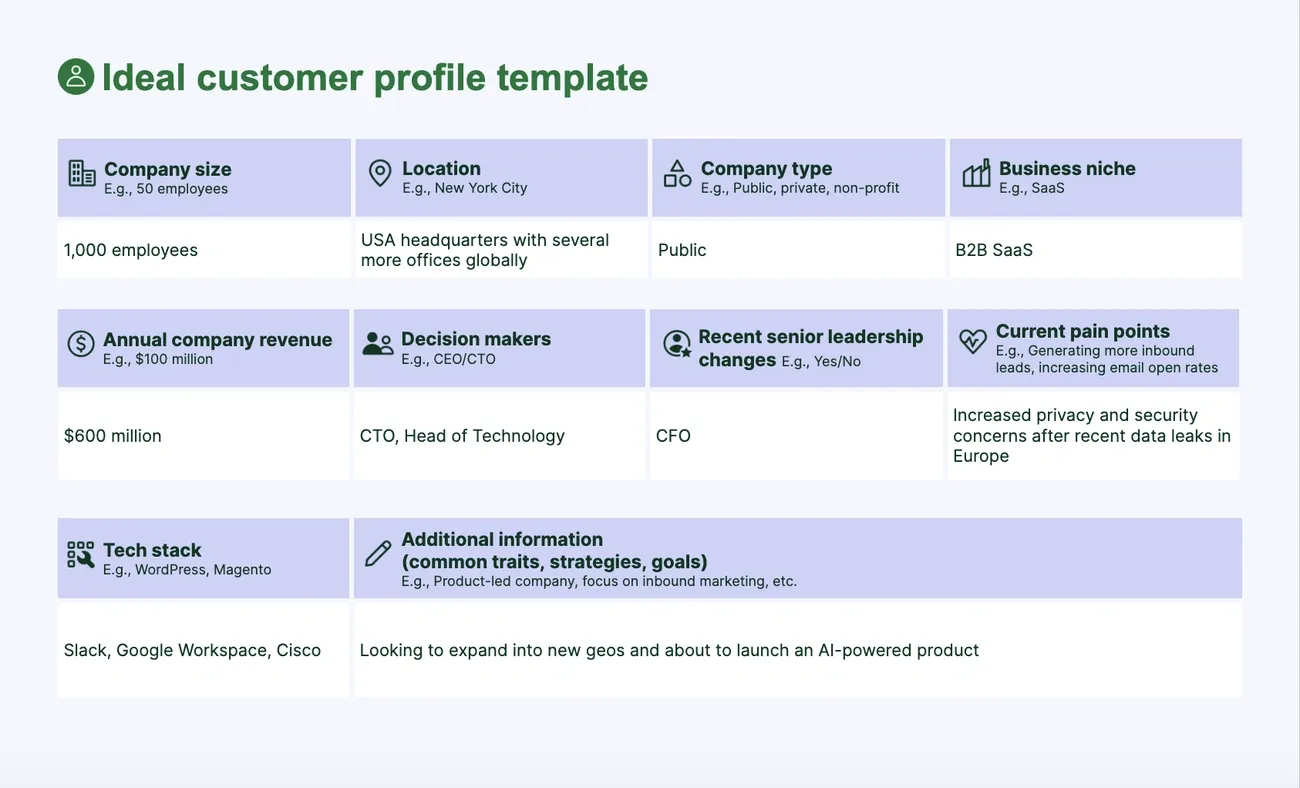
Image Source: Pipedrive
The foundation of every successful automated lead generation system begins with a clear picture of who you’re targeting. Without this crucial first step, even the most sophisticated AI tools will simply deliver more of the wrong leads faster.
Understand your target audience
Creating an Ideal Customer Profile (ICP) serves as the cornerstone of effective lead generation. An ICP provides a detailed description of companies that represent perfect fits for your products or services. Rather than casting a wide net, a well-crafted ICP helps you focus exclusively on prospects most likely to convert.
Many businesses struggle with ICPs that are far too broad. For example, targeting “B2B companies with 100-700 employees” ignores the massive differences between organizations at different ends of that spectrum. Remember that a company with 101 employees operates completely differently than one with 699 employees. They have different maturity levels, organization structures, and decision-making processes.
To develop a comprehensive ICP, you’ll need to examine the following components:
-
Demographics: Age, gender, education level, occupation, and income of your audience
-
Geographic: Physical location of target customers, ideally as specific as neighborhoods
-
Psychographic: Values, interests, attitudes, and lifestyles that drive their decisions
-
Behavioral: Customer actions and patterns, including purchasing habits and engagement levels
-
Technographic: Technology stack and digital tools used by your target audience
-
Firmographic: Company characteristics including size, industry, revenue, and employee count
Set qualification criteria for leads
Once your ICP is established, you need a framework to determine which leads are worth pursuing. This is where lead qualification comes in—the process of predicting whether a lead matches your offering.
The BANT framework remains a popular qualification approach, focusing on four key elements:
-
Budget: Does the prospect have financial means to purchase your solution?
-
Authority: Is the lead a decision-maker with purchasing power?
-
Need: Does the prospect have clear pain points your product solves?
-
Timeline: How soon is the prospect planning to make a decision?
Alternative qualification frameworks include MEDDIC (Metrics, Economic buyer, Decision criteria, Decision process, Identify pain, Champion) and CHAMP (Challenges, Authority, Money, Priority). Regardless of the framework you choose, the goal remains the same: filter out unqualified leads early, allowing your automated lead generation system to focus on prospects with the highest conversion potential.
Identify lead sources and platforms
Lead sources represent the specific channels through which potential customers first discover your business. While traditional advertising dominated thirty years ago, today’s digital landscape offers diverse sourcing opportunities.
The most effective automated lead generation systems tap into multiple sources:
-
Paid ads: Running campaigns across search, social, and display networks
-
Social media: Both organic posts and influencer collaborations on platforms like LinkedIn, Instagram, and TikTok
-
Content marketing: Blog posts and articles that attract prospects with relevant information
-
Referrals: Personal recommendations from trusted sources, often producing warmer leads
-
Organic search: SEO-optimized website content that improves position in search results
-
Email marketing: Newsletters and campaigns that reconnect with prospects
-
Direct mail: Physical marketing materials that still effectively reach certain audiences
By tracking how customers first hear about your business, you can allocate more resources to channels producing the most qualified leads, thereby improving your return on investment. Remember that each source requires a different approach in terms of strategy and measurement.
Map Your Technology Stack
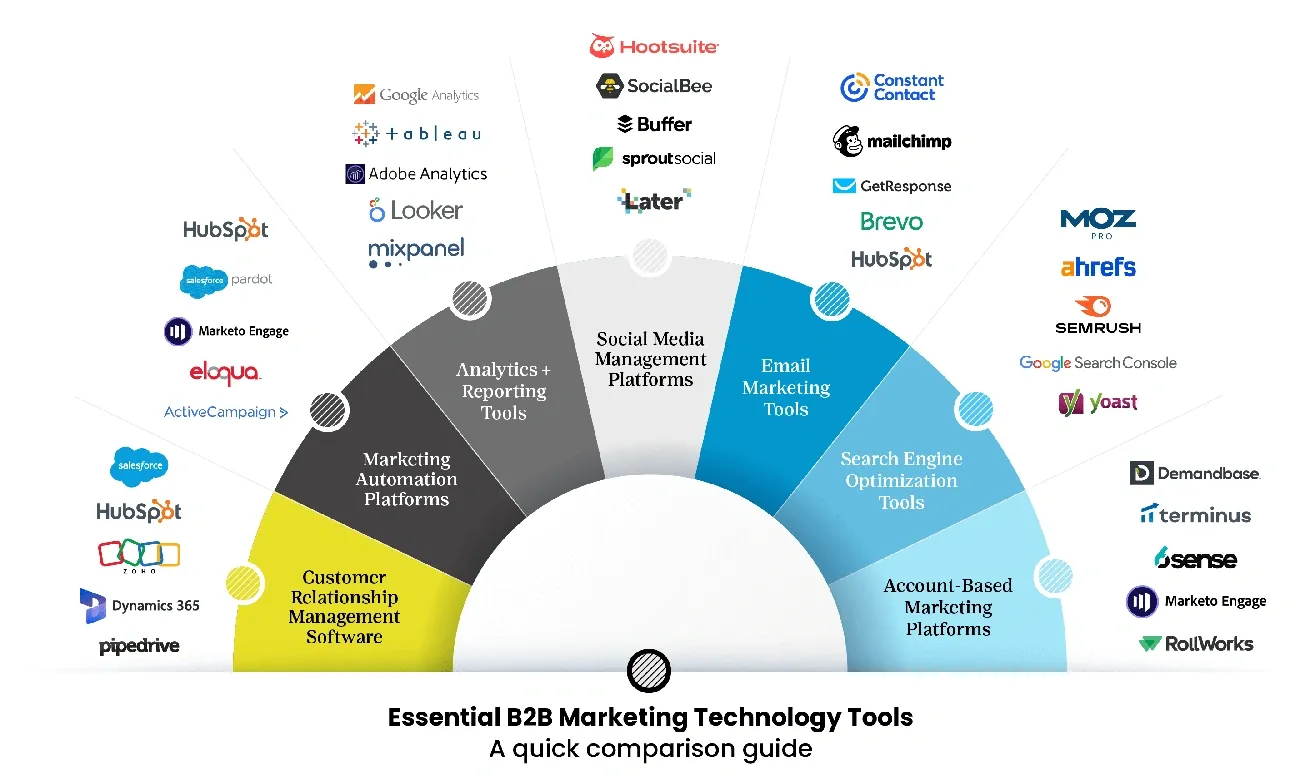
Image Source: AvreaFoster
Building an effective automated lead generation system requires a carefully selected set of tools that work together seamlessly. Once you’ve defined your ideal lead profile, the next critical step is mapping out your technology stack to execute your strategy.
List Your Lead Sourcing Tools
Successful lead generation starts with identifying potential customers. Lead sourcing tools help you find prospects across multiple channels. Consider incorporating the following types of tools:
-
Website visitor tracking solutions such as Leadinfo and Leadfeeder, which identify companies visiting your site and capture their behavioral data
-
Prospecting platforms like Apollo and ZoomInfo, which provide access to extensive B2B databases with verified contact information
-
Social media lead generation tools that capture leads directly from platforms such as LinkedIn and Facebook
-
Landing page builders to create dedicated pages that convert visitors into leads
The right combination depends on your target audience and where they spend their time online. Many companies use multiple lead sources to maximize reach.
Choose Enrichment and Validation Tools
Raw lead data often lacks critical details needed for effective segmentation. Lead enrichment tools solve this problem by enhancing contact information with additional data points. Top options include:
Clearbit integrates with your CRM to add valuable firmographic and demographic details to your leads. Meanwhile, Cognism offers GDPR-compliant data with exceptionally accurate mobile numbers. For technology-focused segmentation, Datanyze provides technographic insights into the tools your prospects are already using.
Companies that use paid lead enrichment tools are three times more likely to see significant improvements in sales efficiency. Additionally, modern enrichment tools leverage AI and machine learning to automatically update lead information over time.
Select a CRM or Lead Database
Your CRM acts as the central hub for all lead data and interactions. According to industry data, CRM platforms have become essential to successful lead generation for businesses of all sizes. The right system allows you to:
-
Centralize lead data from multiple sources
-
Track interactions throughout your sales pipeline
-
Assign lead scores based on behavior to prioritize outreach
-
Enable seamless collaboration between sales and marketing teams
Popular options include Salesforce, HubSpot CRM, and Pipedrive, each offering different levels of complexity and integration capabilities.
Select Outreach and Follow-Up Tools
Once leads are in your database, you need tools to engage them effectively. Modern outreach solutions typically include:
Email marketing platforms such as Mailchimp and ActiveCampaign help generate leads through automated campaigns. For more sophisticated engagement, consider platforms like Outreach.io, which combine AI-powered sequences with conversational intelligence. Alternatively, live chat tools such as Intercom can engage website visitors in real time, capturing and qualifying leads instantly.
By carefully selecting and integrating these components, you’ll build a robust technology stack that powers your automated lead generation system throughout 2026 and beyond.
Build Your Automated Lead Generation Workflow
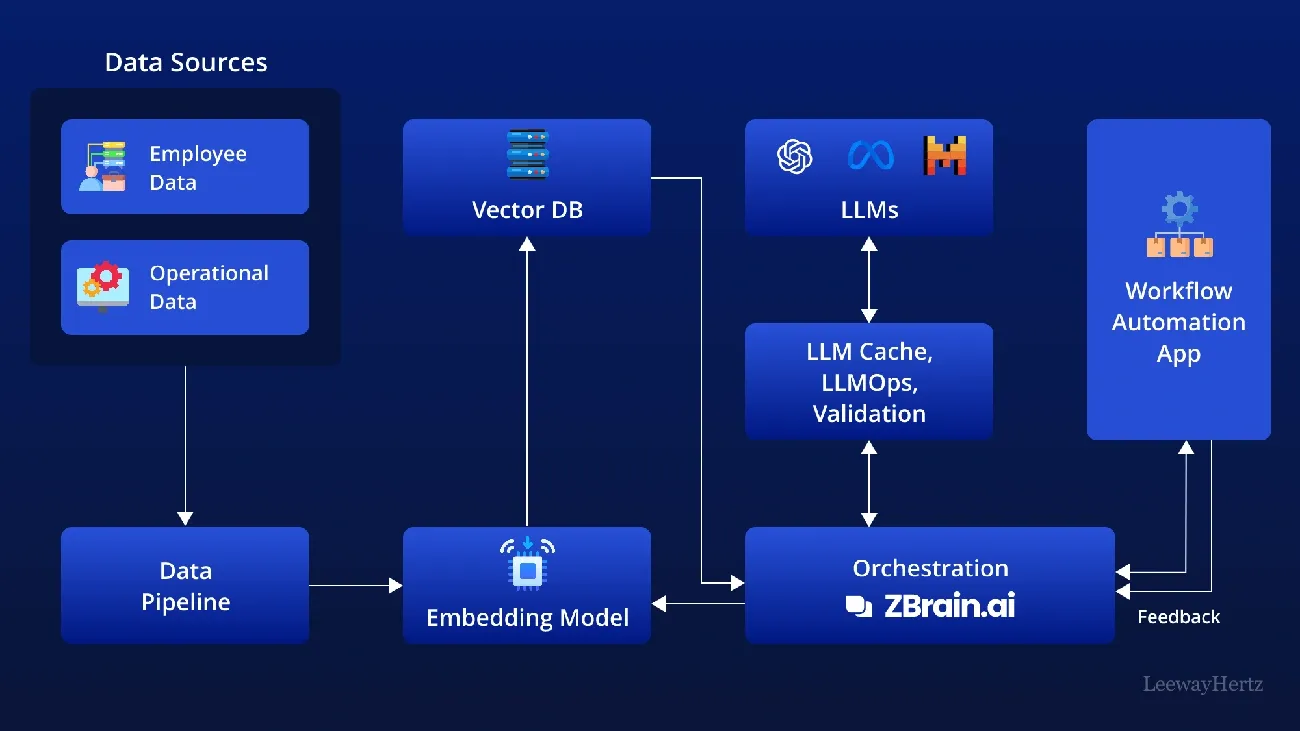
Image Source: LeewayHertz
The true power of automated lead generation emerges when you connect your tools into an intelligent, seamless workflow. This is where disparate components transform into a cohesive system that works while you sleep.
Use AI Agent Builders like n8n or Gumloop
AI agent builders act as the orchestration layer for your lead generation system. n8n stands out as a popular low-code platform that allows you to create agentic workflows by integrating with third-party services. While it has a steeper learning curve, its extensive template library significantly accelerates implementation. n8n users can build workflows that pull leads from multiple sources, enrich them with additional data, and automatically push them into your CRM.
Alternatively, Gumloop offers a more user-friendly approach with its AI assistant called Gummie, which helps build AI-powered agents through conversation. Essentially, it’s “as if ChatGPT and Zapier had a child,” making workflow creation accessible even to non-technical users. Both platforms allow you to create rigid, structured automations or more flexible AI agents capable of making contextual decisions.
Connect Tools Using Workflows
Modern workflow automation operates through trigger–action–condition frameworks that respond to prospect behavior in real time. For example, when a lead downloads your whitepaper, the system immediately captures this signal and initiates a predefined sequence of actions. These workflows continuously recalculate as new information arrives, creating an adaptive system that never misses an opportunity.
Incorporate AI-Powered Lead Scoring and Segmentation
AI-driven lead scoring uses machine learning algorithms to evaluate multiple data points and predict conversion likelihood. Unlike static scoring systems, AI models learn from historical data and continuously refine which signals matter most. This dynamic scoring enables your system to segment audiences into meaningful groups based on both attributes and behavior.
Additionally, these systems track engagement in real time, instantly adjusting scores when prospects interact with your website, open emails, or attend webinars. As a result, your sales team receives immediate alerts when a lead becomes “hot” according to the model.
Add Personalization Layers Using AI
The final component is AI-powered personalization. By analyzing behavioral and engagement data, AI tools can target leads with timely, relevant content tailored to their specific needs. These systems generate messages that speak directly to individual preferences, creating hyper-targeted campaigns that foster meaningful connections.
As a result, your automated lead generation system becomes more than just a collection of tools—it evolves into an intelligent ecosystem that identifies, nurtures, and converts prospects with minimal human intervention.
Test, Refine, and Scale Your System
Even the most sophisticated automated lead generation system requires continuous refinement. Once your framework is in place, optimization begins.
Run Initial Tests and Review Results
Systematic monitoring of key performance metrics forms the backbone of effective optimization. Track open rates, click-through rates, conversion rates, and time spent on landing pages to identify both strengths and weaknesses. These indicators reveal what’s working and what needs adjustment. Initially, focus on collecting at least one month of performance data before making major changes.
A/B Test Different Workflows
A/B testing (split testing) is a powerful method for refining lead generation strategies. This structured approach removes guesswork by comparing two variations to determine which performs better. Notably, systematic A/B testing can increase conversion rates by 10% or more for nearly 65% of companies.
Start with one variable at a time. Email subject lines can increase open rates by 26% and improve email conversions by 29%. Even small changes—such as switching a button label from “Request Information” to “Get Information”—can generate 21% more clicks. Forms with only 3–5 fields typically convert 20–25% better than those with 10 or more fields.
Scale Successful Workflows Across Channels
Once you identify winning variations, deploy them systematically across relevant channels. Instead of reinventing each workflow, apply proven patterns to different platforms while preserving their core elements. High-performing teams schedule regular tests, launching new experiments weekly or biweekly, and allocate time to review results.
Use Feedback Loops to Improve Accuracy
Closed-loop reporting provides continuous feedback on lead quality, revealing which sources generate real sales. This approach creates a virtuous cycle where:
-
Data reveals patterns – Quantitative metrics show conversion rates by source and campaign
-
Sales provides context – Qualitative input explains what reps experience with different lead types
-
Hypotheses drive experiments – Tests confirm or challenge assumptions
-
Results inform adjustments – Successful tests become new standards
This continuous optimization process ensures your automated lead generation system becomes increasingly precise over time.
Measure Success and Optimize Continuously
Success in automated lead generation depends on continuous measurement and optimization. Without performance tracking, you’re essentially operating blind.
Track Conversion and Response Rates
Your lead-to-customer conversion rate is the ultimate measure of effectiveness, calculated by dividing total sales by total leads generated. This metric shows how efficiently your system converts interest into revenue.
Lead response time is equally critical—conversion rates can be 21 times higher when you respond within five minutes. In today’s competitive environment, speed matters more than ever.
Monitor Lead Quality and Engagement
Beyond volume, lead quality determines true ROI. High-quality leads are far more likely to convert, improving overall performance.
Implement lead scoring to assign numerical values based on demographics, behavior, and engagement. Companies that do this see 77% higher lead generation ROI. The investment in proper scoring pays off from the very first campaign.
Adjust Workflows Based on Performance
Static automations eventually fail. Your system must evolve through continuous testing and refinement. AI-driven workflows typically deliver a 27% increase in sales win rates and reduce cost per lead by up to 33%.
We recommend setting 1–2 key metrics per automation and creating feedback loops with your sales team. You need to understand not just what happened, but why. This approach ensures your system becomes increasingly accurate over time.
Ensure Compliance with Data Privacy Laws
Regulations such as GDPR and CCPA impose strict rules on data collection and user consent. Non-compliance can result in fines of up to 4% of global annual revenue.
Implement clear opt-in mechanisms on lead forms and conduct regular audits of your data management practices. If you have questions about compliance, our support team can guide you through the requirements.
Conclusion
Automated lead generation represents the future of efficient business growth. Throughout this guide, you’ve learned how the right automation can reduce your workload from hours to minutes while delivering higher-quality leads.
Your technology stack forms the backbone of this system. You now understand how to select complementary technologies that work together seamlessly—from lead sourcing and enrichment tools to your CRM and outreach platforms.
AI-powered workflows transform these separate tools into a cohesive system that works tirelessly on your behalf. By connecting your tools through platforms like n8n or Gumloop, you create intelligent pathways that guide prospects through your sales funnel.
Testing remains absolutely critical to long-term success. Experimenting with different elements of your system helps you discover what truly resonates with your audience. You can then scale winning approaches across channels while continuously refining them based on performance data.
Measurement provides the feedback required for ongoing optimization. Tracking conversion rates, response times, and lead quality delivers actionable insights to fine-tune your workflows. Additionally, staying compliant with data privacy regulations protects both your business and your prospects.
The companies that thrive in 2026 will be those that embrace automation not as a replacement for human connection, but as an enhancement that enables more meaningful interactions with qualified prospects. When implemented correctly and refined continuously, your automated lead generation system becomes a powerful growth engine delivering results day and night.
Remember: the investment in automating lead generation pays for itself from the very first conversions. If you have any questions about implementation, our team will be happy to help you build a lead generation machine that consistently fuels your business growth for years to come.
Key Takeaways
Automated lead generation can dramatically improve business efficiency—reducing manual research from 3 hours to just 15 minutes while consistently delivering higher-quality prospects.
-
Define your ideal customer profile first – Go beyond basic demographics to target prospects most likely to convert
-
Build an integrated tech stack – Connect lead sourcing, enrichment, CRM, and outreach tools into a seamless workflow
-
Use AI workflow builders – Platforms like n8n or Gumloop enable intelligent automation that runs 24/7
-
Test and optimize continuously – Systematic A/B testing can deliver 10%+ conversion improvements
-
Focus on quality over quantity – Track lead-to-customer conversion rates and response times to maximize ROI
The key to success is treating automation as an enhancement to human connection, not a replacement. Companies using AI-driven lead scoring see 77% higher ROI, while proper automation can increase sales win rates by 27% and reduce cost per lead by 33%.
FAQs
Q1. What are the key components of an effective automated lead generation system?
An effective system typically includes lead sourcing tools, enrichment and validation solutions, a CRM or lead database, and outreach and follow-up platforms working together to identify, qualify, and engage prospects efficiently.
Q2. How can AI improve lead generation processes?
AI enables personalized outreach, more accurate lead scoring, automated workflows, and real-time insights that improve targeting and conversion rates.
Q3. Why is defining an Ideal Customer Profile (ICP) important?
A clear ICP focuses your efforts on prospects most likely to convert by aligning targeting with demographics, firmographics, and behavioral patterns.
Q4. How often should I test and refine my system?
Continuously. High-performing teams run new tests weekly or biweekly and regularly review results to adapt to changing conditions.
Q5. What metrics should I track?
Key metrics include lead-to-customer conversion rate, response time, lead quality scores, engagement rates, cost per lead, and overall ROI.If you want, I can now:
-
tighten this for SEO,
-
adapt it to a landing page or whitepaper,
-
or localize it for another market (EU / US tone).
